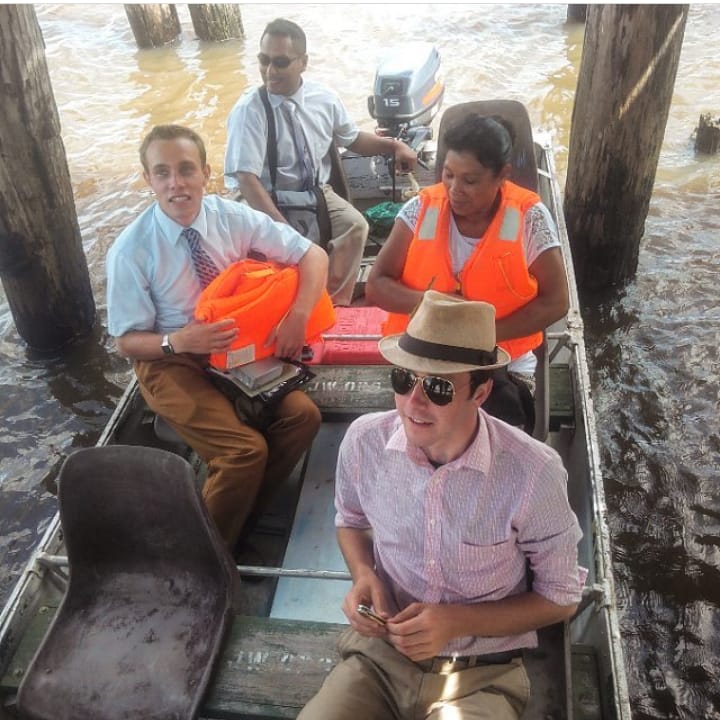
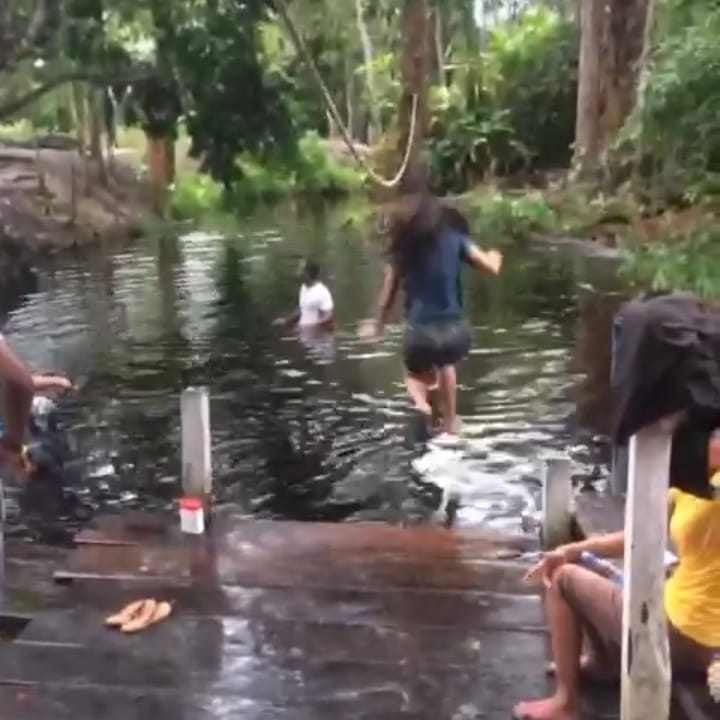
Wednesday, August 17, 2022

Hiraeth


I came across an interesting word a while ago, "Hiraeth." It's a Welsh word that has been translated in a small variety of ways, one of them being "Nostalgia for a home you can never return to."

For the last nine years, Orealla has been home. That's a third of my life, and most of my adult life. Throughout that time there have been gradual changes, obviously, but it has remained essentially the same place.

When the Covid lockdowns began, they brought the first massive upheaval I had experienced here. The meetings and ministry changed in such drastic ways that we're still struggling to get our in-person meetings back to what they were before. But the greatest change has been with the people. Through death or people simply leaving the truth, we lost about 20% of our congregation. Some of these I talked about on this blog before, such as when Vincent Miguel died days before the Memorial. Others I have not talked about, usually because I had no idea what to say about it. But getting back to Orealla and feeling the difference, I've finally figured out what to say.

Among our losses in the last two years was Mark Herman. I met him just two weeks into my first Guyana trip. In those days meeting attendance was very low, sometimes just five showing. Mark was always one of them, despite needing to be brought in a wheelchair or wheelbarrow. When Public Witnessing carts were first sent to Guyana, the branch ensured the first one was sent in for Orealla so that Mark could use it and more freely share in the ministry. He immediately signed up to auxiliary pioneer and put the cart to use. By time 2020 hit, he was serving as an elder, attended Pioneer School, and had his life story published in the Watchtower.

Then a few weeks ago I got a message that he had died. He was 36. The funeral had Zoom connected, and so many people came it filled us to capacity and more were trying to get in. I had no idea this man who rarely left his village had so many friends and had had such an impact on so many people's lives.

In his life story linked above, he repeatedly talks about the death of those close to him and what a large effect it had on his life. I often wonder if he ever suspected his own death would have a similar effect on the rest of us.

Coming back to Orealla and finally getting an in-person in the Kingdom Hall here (my first since 2019) had the unmistakable feeling of being back home, but there being something huge missing. I found myself getting lost in my notes during a talk because I kept staring at the empty spots where Mark and Vincent normally sat. This was home, but somehow not the same one I had left.

The entire week since I've been thinking of the Apostle John. Specifically his time on Patmos and afterward. When he began his service, he had an incredible circle of friends. He had a central scope of work, and a home base to work from. But by time Patmos and Revelation came, his friends were long gone. Jerusalem was gone. His scope of responsibility had grown unbelievably large. The attitude of his fellow Christians would have been changing as the apostasy neared. His understanding (or assumption) of what the near future held would have changed more times than I can count. And I wonder how often he too experienced hiraeth. A longing for that familiar home he once had that he could never get back to.

But here's the point: even if he did experience that, what did he do about it? He did his job. He accepted whatever direction he got and kept moving. Even under imprisonment he took extensive notes of the vision he was receiving, and after release still devoted himself to writing to the congregations and to recording the life of Jesus. The circumstances around him changed more than I can comprehend, but he maintained the zeal and obedience he'd had when things were familiar. And though he could never have returned to the familiar, many of the changes he saw were for the better.

So what should I be doing? Accepting the change, good and bad. Be grateful for the happy memories I have from before, and look for the positive in the new ones.

Case in point: my new house, pictured at the start of this entry. I finally get a home with running water inside.
Thursday, August 4, 2022

An Elaborate Attempt to Get Life Back to Normal


 "Apart from me you can do nothing at all." - John 15:5


As you have possibly noticed, this blog has been pretty inactive since last September. The last entry ended with me saying that I was in the US and still joining my congregation on Zoom for service and meetings, and that I "should be able to continue to do so until I'm able to physically return to Guyana (which will be when? Who knows. Covid cases in the US and Guyana both are going up, so we'll see how things pan out)."

 Turned out the answer was it would be August 3rd. Many things got in the way, including (but not limited to) Covid cases in Guyana skyrocketing briefly, two of my flights getting cancelled, my visa running out, Guyana getting labelled a "Do Not Visit" destination, and so forth. Every day when I looked at flights again it seemed like the headlines were always an airline cancelling or delaying thousands of flights and passengers getting stranded at airports throughout the world. This is all well and good though, since being in the pandemic era, my physical location didn't really matter too much. But then in-person meetings started back up, public witnessing began going again, and I have many many return visits and studies that I simply was never able to contact through the phone and who I really wanted to get back to.

Ultimately though, I couldn't figure out whether this endless hassle of trying to get back was a casualty of world events, or if I was in effect getting hit on the head and told it was time to just up and leave Guyana. Around this same time I was doing Memorial Bible reading, and I came across the verse mentioned above. Now, while this verse is not necessarily related directly to what I was experiencing at the time (if you want a correct explanation and context, see here and here and here and here instead) it did have the effect of making me pause and consider: how much of those failing plans were me trying to work out for myself what to do?

So I decided to give it another go. But first, I was going to very thoroughly pray about it. I was going to very thoroughly lay out my plans for return. I was going to ask for clear answers as to what was happening and how I should respond. Then the process of making plans began.

First thing you'll notice when making plans to travel from Ohio to Guyana is that it is hardly going to be a pleasant trip. Many available options involve swapping airports or sitting in Miami for 23 hours. The other option is a short flight from one place to another, to another, to another, to another, which only seemed like it would increase the opportunities for a flight to get cancelled on me. I finally found a sequence of flights that seemed like a reasonable balance between number of flights and duration of layovers (with the added bonus of getting to spend a few days with friends in Arizona) and put the plan into motion.

6 AM meeting with my congregation on Zoom. Time zones are my enemy.

I was still positively terrified of everything that could go wrong, but there was only one way to test out whether I should still attempt going back, so I went ahead and tried it. August 1st was the date for my leg of flights leading to Guyana, and the fear hadn't really passed. The fear that my life had turned into an enormous Jenga tower and something was going to come along and kick it over. But that morning I took a look at the Daily Text and saw something interesting:

"Apart from me you can do nothing at all." - John 15:5

It's startling how helpful that reminder can be. So off we went to the airport. And two interesting things happened.

1. Everything that could possibly go wrong did. Flights delayed? Yes. Lost baggage? Of course. Visa trouble? Absolutely.

2. Everything went fine. As in, I still made it here. We were super late, the total flight took from Monday 7:00 pm until Wednesday 1:30 am, but I made it back. Everything that could've possibly inconvenienced me is what occurred. Nothing that could have ruined the trip did.

Obviously I have still have many outstanding questions. I'm still in the capital of Guyana trying to figure out what will happen to my visa and if I'll be able stay longer than the 3 months they gave me. Many of those prayers are still unanswered. But clearly I have no reason to worry. I'm not going to rely on myself. I'm going to keep moving ahead in whatever seems to be the right way, and then respond to direction or answers to prayers when they come.

Thursday, September 30, 2021

Enthusiasm and Joy


Enthusiasm and joy are two qualities that I've never needed to work too hard at. Compared to other qualities I need, they come rather naturally to me. These two things have definitely been a huge aid in staying positive and enjoying the assignment I've had for the last 11 years. But as it turns out, as naturally as they come, my internal sources of joy and enthusiasm are not limitless.

Prior to lockdown, it was obviously easier. Constantly seeing the others in my congregation, getting out and walking house to house past rivers and hills, and so on. It kept me on an easy high plane of enthusiasm, even when it got physically tiring. But after more than a year of quarantine, those feelings certainly took a major hit. More and more it felt as though I was exerting maximum effort for minimal payoff. This didn't come immediately.

At first, everything was great for me in lockdown. Life became easier, I had more free time, and I could delve into study projects and hobbies and all sorts of things I hadn't had time for previously. But slowly as we've adapted and returned to certain standards and practices we had before, the workload increased back to its former level. Unfortunately, while the workload returned to normal, the things I used to relax and rebuild my enthusiasm/joy levels did not return.

Now in the previous blog entry, I shared the main things I've been using to maintain sanity, namely study projects. But even as essential as those have been, you can't realistically study constantly. Your brain needs a break. More often than not, I found myself just staring at a wall trying to determine what to do that wouldn't feel like too much of a burden to attempt. Simply put, I couldn't think of anything to do. It felt almost like a building pressure valve that simply wouldn't open. Happily, even though I personally couldn't find a solution, one was handed to me.

After a stretch of several months with no good news whatsoever, the floodgates opened. In the span of just three weeks we got a new elder and an incredible four new regular pioneers. Immediately our field service groups felt reinvigorated and my personal workload diminished. This means for a relatively small congregation of just 42 (yes, 42 publishers) we have 4 elders, 1 ministerial servant, and 12 pioneers, which is possibly the highest ratio I have ever witnessed.

This development also reminded me of something important. Instead of looking at myself the entire time, examine the congregation I'm with. After an honest look, I realized I cannot help but be impressed by the people I'm surrounded with. Among this small group of 42, we have people who've helped with Kingdom Hall and Assembly Hall construction, served at Bethel, been Special Pioneers, helped with Warwick construction, attended SKE, instructed Pioneer School, done seldom worked and unassigned territory trips, had their life story in the Watchtower, and had their pictures shown at Annual Meeting. Suddenly what felt like being on a sinking ship became an airplane taking off. It became more and more obvious it makes no sense for me to feel unproductive just because I can't go walking up hills anymore. The congregation is growing faster than ever and our territory assignment is still incredibly productive.

Though I think my shoes are grateful for the vacation.


Due to financial reasons (aka I was out of money) I had to take advantage of a window of opportunity and leave Guyana and go back to the US for work (see opening pic for the lovely backyard). But thanks to the Zoom connection we worked out, I'm still able to be part of my assigned congregation for meetings and field service, and should be able to continue to do so until I'm able to physically return to Guyana (which will be when? Who knows. Covid cases in the US and Guyana both are going up, so we'll see how things pan out).

But no matter where I am, I can stay busy. Is my boredom still there at times? Of course it is. But is it possible for me to experience enthusiasm and joy despite that? Of course it is.

Tuesday, June 22, 2021

1+ Year of Lockdown


The quarantine in Orealla began on April 2, 2020, and from then to now I've been out of the village exactly once. As you can likely imagine, this has been a jarring adjustment for me as I formerly was in the habit of traveling out once per month. While my local circumstances are not nearly as bad as some have been experiencing, being stuck in Orealla over long periods definitely comes along with its own set of issues.

For example, electricity only comes on from 5pm - 10pm each day (and even then, sometimes it's less, or not at all) meaning in the middle of the day when the sun is at full intensity, there is no relief. During rainy season when the place cools off this is no problem, but during dry season, like now, my house is fully capable of hitting 130 degrees Fahrenheit inside.

Fun fact: a reasonably cooked steak has an internal temperature of 145 degrees.

Another major issue here is the lack of reliable internet. There is a government provided wifi, which works perfectly well 20% of the time. I'm also able to use mobile data, but you can imagine how quickly something like a Zoom call burns through that. So between the excessive heat, isolation, and slight stress at having to scrupulously time my Zoom calls so I don't wipe out all my data, what do I do to deal with it?

Simple. Study projects. So, so many study projects.

Many people have questioned me in the past why I still prefer paper copies of books when I have the exact same publications on my laptop and phone. And the answer is simple. If power doesn't come on for three days straight, and I can't use the solar panel on my house because we haven't had sunshine in a week, the laptop and phone are toast. But that 1989 Awake bound volume? It has a date with me, my hammock, and the jug of coffee that just finished brewing. Bonus of this arrangement: when the phone is dead, nobody can call me and interrupt the reading.

(and using the 1989 Awake bound volume wasn't a random choice. That year the magazine had an epic 24 part series on the history of false religion and it is amazing and you should quit reading this blog and go read that series instead: https://wol.jw.org/en/wol/d/r1/lp-e/101989002)

Happily I have been slowly building a network of people who are choosing study projects as the best way to use their time, and that has been a huge aid as well. Binging study projects is great, but sometimes you need to embark on a long monologue to someone about what you've been reading, and lately the monkeys in my neighborhood have simply not been as attentive as they used to be.

Another major helping aid has been the frequent appearance of barrels being sent to me from overseas. For a while in the lockdown, getting food was a major problem. Sometimes because food was scarce, other times because I couldn't get to the bank to get money out of my account so I could buy the food that was available. So I'm sure you can see how getting a 55 gallon barrel full of bacon and other things would help out quite a bit.

(Yes, there was things other than bacon. No, I don't recall exactly what they were. Once you see dozens of boxes of preserved bacon, everything else kinda becomes a haze)

This should last three or four whole days!

Oh, and the other very, very important thing consuming my time: writing songs about literally every account in the Bible. My goal is to one day have the entire thing converted into songs. Bible: The Musical if you will. While that may sound ridiculous (which it is) it does work wonders in helping you remember things. I now have all the kings of Judah and Israel memorized thanks to a very strange song that I wrote in about twenty minutes during a day of exceptional pandemic fatigue.

(Saul, David, Solomon, Rehoboam, Abijah, Asa, Jehoshaphat, Jehoram, Ahaziah, Queen Athaliah, Jehoash, Amaziah, Uzziah, Jotham, Ahaz, Hezekiah, Manasseh, Amon, Josiah, Jehoahaz, Jehoiakim, Jehoiachin, Zedekiah. Without checking a written record. Huzzah! Thank you Appendix A6, and also the karaoke version of Yakko's World I found one day and revised the lyrics to!)

Obviously I have no idea how much longer quarantine and such will last, especially as things have recently taken a turn for the worse in Guyana. So if anyone has ideas for study projects, please send them along. And I highly recommend you try some for yourself. It'll do you wonders.

Tuesday, April 6, 2021

Memorial 2021

For the last several blog entries, the majority of the space has been dedicated to the various difficulties we've encountered with trying to handle meetings, field service, etc. So for this entry, I'd like to tell you about how all that work has paid off even better than we could've expected. And since this is in a written form and not a conversation, I'm going to take you the long way around to it.

A particular challenge with the pandemic is that many need-greaters were out of the country when everything shut down and restrictions were put in place. Happily with meetings moving over to Zoom and so forth, they were able to remain with their congregations, but getting back to their return visits and Bible studies proved a challenge. Lots of people in Guyana don't have internet connections, so therefore how can a publisher in the US/England/Trinidad stay in contact with them? International calling isn't really an option considering the cost and the sheer amount of minutes that would be used. Zoom does have a feature to call a phone number and be connected to the meeting, but the number you call is a US number and therefore doesn't do us any good.

Due to this problem, we began working with a network of need-greaters to find a way around this, and we did at last work out a marvelous system to allow someone in another country to join Zoom, and then we (locally in Guyana) call their return visits and patch them together. I won't go into the details because it's long and complicated, but suffice it to say we found a workable system and everyone was happy.

The more we used this system, the more it nagged at some of our minds. Here's why:

I've talked at length about how in Orealla we use phones for our meetings due to even rarer internet than most of Guyana, and the internet we do have we pay based off how much we use. Problem with phone meetings is the signal is bad and the more phones we have on the conference call, the more beeps we get during the meeting. But some in Orealla had internet. Is there a way we can adapt this overseas publisher return visit system to our meetings here?

The breaking point came during a meeting where we had so many phones tied in that we would get 10 beeps every 15 seconds. We couldn't hear anything. It was time to change how we connected our meetings. So we did a test. We calculated exactly how much data it would take to connect to an audio only Zoom meeting, and then called every single household in the congregation with a smartphone and asked if they would be willing to try it. About half the congregation had smartphones and data. We set up a Zoom room and had them join, and then we connected the other half of the congregation by phone like normal.

The result? Massive success. Clearer sound than we'd ever had, and fewer beeps (sometimes no beeps at all for, again, reasons that take too long to explain).

With every passing week, more people began budgeting data for meetings and making the switch over to Zoom, which has had the extra bonus of freeing up space on the telephone conference call so we could have more interested ones listening in (because yes, we had to turn people away from the meetings before this due to not having space on the limited size conference call). Our average meeting attendance continues to climb and so far shows little sign of slowing down. The special talk had an attendance of at least 89, more than double our 42 publisher count. Our goal became, for the Memorial, to get all publishers on Zoom so we'd have the phones completely free for interested ones without internet or Zoom or whatnot.

Plans were going great. Everything in place.

Then the day before the Memorial, during a seemingly normal day of field service, I got a text message that one of the brothers in our congregation died.

As I heard other publishers talking in the background on their call, I stared at the phone dumbfounded. I read it about ten times over because I was sure I had misread something. Finally I responded asking for clarification. It couldn't be. This brother was 40 years old. He had no real medical problems. He had a wife and three children between the ages of 17 and 10. He was the picture of health. Turns out an accident had killed him that morning.

We had already experienced trying to organize a funeral in the middle of the lockdown. But this was the day before the Memorial. How do you prioritize?

The man's wife and children gave us the answer. They focused on the Memorial. They were going to address everything else later. They made the bread, got the wine, prepared their home, and that morning watched the Morning Worship video. They invited some of their relatives, who attended.

And what a Memorial. With the Zoom/phone linkup we got 149 in attendance, more than we've had for some of our circuit assemblies. And while every Memorial talk is meaningful, this one was more so than ever for us. 

Sunday morning we began working out the arrangements for the funeral. Monday the family was in field service again. Tuesday I realized the deceased man's father was scheduled for talk at our midweek meeting, so I called him to offer to find a substitute for it. He refused, and Thursday he gave the talk as assigned. Saturday was the funeral and the family strictly adhered to the Covid protocols locally put in place, and made sure all attendees did too. So many wanted to attend that we had to make the Zoom feature available for that as well, and so many came that it filled up our room.

The brother who died was my neighbor in a literal sense. He also did more than anyone else around (myself included) to make sure my home kept well stocked with food and essential supplies during the most difficult parts of lockdown. And someday he'll be delighted to learn his family and congregation made sure to focus more on the death of Jesus than on him. He was that kind of guy.


Thursday, January 7, 2021

Out With the Old, in With the New


You may remember five full years ago I moved out of the Kingdom Hall's attached house and into a different one nearby (pictured above). After a half decade, it has come time to move out, and very very hastily as well.

Note to landlords: if you want to keep your tenants, don't raise the rent 150% overnight.

Can't complain though. The house provided me a place, as well as the Circuit Assembly guests we would constantly get, plus a never ending stream of roommates and house guests. Seriously. I got up to 70 people passing through my place before I just quit counting.

But of course, needing to immediately move raises the obvious question. Move to where? Well, by the strangest coincidence (Coincidence? I think not!) one brother needed to move out of Orealla to another village just three weeks prior, leaving behind a fully furnished home. So here's a few of the perks:

1. The person we're renting from is now a Witness instead of someone from the field

2. Our neighbors (on both sides!) are now also Witnesses, as opposed to a police station and a church

3. This house is not on stilts like the previous one, but rather has a complete downstairs and upstairs (seen in the picture below)

Could it use a coat of paint? Yes, but let's not be hasty.

4. One of those neighbors has a freezer and lets us make use of it!

5. We can still access the village wifi from here, which has even allowed me to use Zoom on occasion!

6. This one has a toilet (outhouse) already. At the last house we didn't get one until a full year had passed.

Plus, it is magnificent to get a little further away from the center of town. When I first came here seven years ago it was practically Mayberry, no crime, no disturbance, whatsoever. Now the level of crime has increased somewhat, people are less trustworthy, and Orealla is even jumping on the bandwagon of civil unrest.

It was bound to happen eventually.

In case anyone is worrying about my health and how the village is doing because of the line about how the toshao (village captain) has been handling Covid, you have nothing to fear. The protest is that he's being too restrictive. As far as keeping covid at bay, we're all doing fine.

So in summary, getting away from all that and further into the bush surrounded by JW neighbors, with semi-reliable wifi has been amazing. And don't even get me started on the yard. Instead of a tiny square of grass surrounded by dirt roads, we have this...


Thursday, November 26, 2020

Pause and Reset


 One of my favorite ways of passing time is rewatching Gilead Graduation programs, and one of the points that stuck out to me more than any other is to, quote, "pause and reset." The advice was specifically in regard to getting away from devices and the digital world, and instead taking some time to meditate on creation, and how doing this will help your mental state.

I have long loathed cell phones, so in general this was easy advice for me to follow. Especially living in a place like Orealla where I only get electricity a few hours a day, it kind of forces you to separate from the devices and do something else.

This, however, has recently become a challenge. Whereas before I spent almost all day outside, routinely walking 5+ miles a day for Bible studies alone, now we're being told to spend our time indoors. As for devices? They're inescapable now. For field service, I've written already about how letter writing is not really an option for us, so it is all telephone witnessing. So there's something like 2.5 hours per day on my phone already. Add another hour for studies and we're at 3.5. Now consider that, even prior to lockdown, getting our literature on time was a hassle, so you can imagine quarantine has made that even more difficult, meaning for the most part all meeting preparation is done using our phones instead of paper copies. Then meetings themselves requires everyone being tied in over the phone. Not to mention shepherding calls, Convention and assembly are watched on my laptop.

Now allow me to make one thing absolutely clear. I am not complaining about these things being available, because without them there's no way we could ever get by or find another way to maintain meetings/service. What I am saying is that the switch has been absolutely jarring for me, and has made me more reliant on the electricity than I ever was before.

So recently in my habitual rewatching of Gilead Grads, I came across the advice once more to "pause and reset," and I will admit my first reaction was the laugh at the advice to give devices a break. How can that be done? It can't.

Or at least that was my first thought. When I thought about it realistically though, it became more clear. The advice was never to give up technology entirely, it never has been. Just put it down sometimes when you aren't in need of it. Go outside and observe creation. If you can't go outside, find another way to observe it.

I'll be honest here, I have no idea how easy or difficult of a thing this is for most of you. I have experienced exactly one location since all this began, so I'm not going to pretend to be qualified to tell you how to adapt to your circumstances. But I can tell you how I've been able to.

Thankfully I live next to a river. It's close enough to my house that I can go to it daily while still "sheltering in place," and without coming in contact with other people. At first I would go to it primarily to swim, do laundry, etc. But it dawned on me that that's a terrible waste of an extraordinary privilege. It is the absolute best opportunity to put down the phone (after service is over) and get away from it. And you know what? It is easy. It's amazing how quickly my mind wanders and how quickly I lose track of time. I have never once missed a vital phone call or an imperative text message. And it feels so much better to get back home to a few messages waiting for me, rather than to be sitting next to the phone and feeling it constantly vibrate throughout the day.

And that electricity I've come to rely on so much? If it doesn't come on when it's supposed to (which is, er, about three times a week) it no longer feels like the end of the world. Go sit on a dock and stare at the water, or the sky, or the sunset, or whatever there may be that day.

Sometimes I sit and think. Sometimes, I just sit.

So again, I have no idea what each of you, with your unique circumstances, are able to do. But I definitely recommend you give it a try. Find a way to pause and reset. Doing so makes the time you're able to spend with other people through devices so much better.

Sunday, September 20, 2020

All Pro, No Con


I distinctly recall the first time I began to think the idea of moving where the need was greater was appealing. The 2006 Yearbook had been released, and I decided I was going to make a real, concerted effort to read the entire thing front to back.

(in a twist of irony, the first time I'd attempted this was the year before, aka the yearbook about Guyana, but I also distinctly recall deciding to skip Guyana's section and go to Iceland instead, because it seemed more interesting at the time)

The 2006 Yearbook was about Samoa, and I was enthralled. As fascinating as the stories and all were, what really stood out to me was the life of one man who moved to serve there early on and spent his life slaving away trying to help out. The payoff came, decades later, when Samoa built their first Assembly Hall, and this same brother was invited for the dedication program. I was struck for a moment, wondering how he would've felt looking back on his life, the time and effort he'd put forward, and how magnificently he got to see it paying off. This kickstarted an obsession with me. The idea of reaching old age and being able to look back with absolutely zero regrets about how my life had been used so far. I imagined that was what this man was able to do, and that's what I wanted as well.

(disclaimer: I have not gone back and double checked this story at all, so I may be remembering it incorrectly. Whether I am or not, this was the gist of the affect it had on me)

So honestly, being a need greater was not necessarily the goal, but rather that sense of a life well used. Need greating was certainly an option, but not the main focus. It didn't become so until I was introduced to Guyana (properly this time).

More than ten years have passed, and so far it has turned out even better than I expected. Take my current assignment, for example. When I first arrived in Orealla, there were two appointed brothers (one of which was, well, me). There was about 15 publishers and about the same average meeting attendance. We had three pioneers. Attending circuit assemblies and conventions was a constant struggle. I went into this thinking it was a three month assignment, and at first I remember being grateful that was all the longer it was going to be. This seemed too difficult of a place to be for much longer than that.

That was six years ago. And while we haven't built an assembly hall in Orealla, even in just those six years things have changed dramatically. For the better.

Even in the midst of a pandemic, we've seen our numbers growing. Two new baptized, one new unbaptized, and more return visits/studies than we can handle. The total number of publishers has grown from 15 to 42 at the present moment. The two appointed brothers have become five. The three pioneers have become eight (with a whopping eleven signing up for auxiliary during this last C.O. visit!) It has now become the norm for our attendance at pioneer meetings to exceed our average meeting attendance from years ago.

The biggest difficulty we've had in the midst of the pandemic has been how to tie in all the people for meetings who've shown interest. I've talked before about the system we've been using where we have five conference calls tied together by a conference call. But during the recent CO visit we needed to tie together a total of ten to fit everyone. Working out the logistics was a very exciting challenge.

This was (I think) draft #3, and the one we eventually used.

And while, again, I haven't been able to sit down in the auditorium of a newly built Assembly Hall, I still get to marvel at how quickly the work here has progressed. I've been able to see us even getting our own assemblies (in rented facilities) in this village, sparing everyone the stress and expense of traveling out for it.

If you had told me after my first meeting that we would reach this point in just a few years, I never would have believed it.

Now let's not sugar coat things though. It's been rough at times, and I very nearly got fed up and left on at least two occasions. But in all honesty, would it have been different anywhere else? It's not like life would've been easier or more pleasant if I'd stayed where I was, or if I'd taken another assignment elsewhere. Life is going to be rough at times. That's all there is to it.

The chief difference? This way, despite dealing with stress and all that, I presently have no regrets about what I've done with my time.

And I intend to keep it that way.

Monday, June 15, 2020

Quarantine on the Corentyne

I have battled with how to handle this blog post for a considerable amount of time now. I try to be generally positive on here, but it's difficult to manage that when talking about 2020 and the events it's contained. Eventually it reached a point where I decided I wouldn't even try.

But then I remembered storm clouds. You know the expression "silver linings"? I looked up the full phrase, and it is "every cloud has a silver lining", or in other words, no matter how bad things seem, there is always a positive element to it. And I feel this expression fits our current situation perfectly, because I don't think any one of us would be crazy enough to say everything going on is good. And yet, there are still many things to be thankful for. Dwelling on the positive doesn't mean we're glad these things are happening, but at least we're finding the best part of it.

So with that in mind, let me share with you what's been happening in Orealla since all this insanity has gone down.

When the virus first hit Guyana, I had the incredible misfortune to actually be in Georgetown (the virus epicenter) at the time. Due to this, when I was preparing to return to Orealla, I was told that they were banning anyone who had been in or near Georgetown. I would have to wait two full weeks before I could come back in, or fourteen full days. That wasn't too big a deal, some brothers out on the coast were able to find me a place to crash for the time. It was comfortable, it had electricity, refrigerator, all that good stuff. Like was good.

But as my 14 day ban continued, Coronavirus starting building a stronger and stronger presence in Guyana, and it spread from just being in Georgetown to getting within one hour of where I was staying. The village council in Orealla got understandably worried, and eventually decided they would shut down all boats in and out of the village, so there would be no chance whatsoever of the virus reaching them.

Great idea. Sensible precaution. But I was still outside.

One night (the final night of my 14 days ban) a brother in Orealla calls me and tells me there is one last boat going into Orealla the following day. If I don't catch it I'm stranded. So I pack up and run down to the dock the next day. After some slight hassle on the boat where I had to try to find proof that I hadn't been in Georgetown for 14 days (which I managed to find!)I was allowed back in. And with that, the river shut down.

Obviously, the biggest question became how to do meetings? Many congregations are doing Zoom meetings, but we don't have the internet requirements for that. We considered downloading and distributing the streamed meetings, but then realized about half the congregation doesn't have the equipment necessary to display the videos.

Finally, the solution came. Everybody at least has an old touchpad style cell phone, so we found the maximum size conference call our cell provider allows (six phones total) and split the congregation up into four groups of six households. Each group would have to do their own meeting individually.

This lasted about a month and a half, when we discovered an odd but workable way of expanding the conference call so large we could fit the entire congregation on one call. Each hosting phone has to purchase a considerably expensive cell plan to allow it to happen, but thankfully we've gotten some overseas contributors who have enabled us to keep renewing this plan month after month. As of last week, we've even figured out how to tie in phones from other congregations (and even overseas!) to allow visiting speakers, which is giving the local congregation a nice break from hearing the same three voices every single Sunday, over and over and over again.

However, this left another problem. Field service. Letter writing doesn't work here because there's no mailboxes or delivery service. The only way we could deliver our letters would be if we were to go house to house leaving them in doors, but I'm sure you can see the problem with doing that.
Of course, with the swanky new phone plan six of us got, phone witnessing became an option, but there was a problem with that too. Even though practically everyone in Orealla has at least a cheapo cell phone, there's no phone directory. I personally have the numbers of only witnesses and the local hospital workers. So who can we call for field service?

Here's where our C.O. stepped in and worked out a deal for us with a city congregation. They have literally thousands of homes with landlines, whose numbers you can find on the internet and on a phone directory. So this congregation went through the work of compiling around 2,000 phone numbers and sending them to us, so we could do phone witnessing. So now, each of the six hosting phones (which all have unlimited talking time) simply call the others in the congregation who want to share in ministry for the day, and there we go. We remain in our homes, we get an almost endless supply of people to call, and all is well.

Now if you're wondering how we're getting on with the river shut down and no boats coming in bringing supplies, honestly we're fine. Orealla has only gotten electricity in the time that I've been here, so everyone is pretty skilled at living without conveniences. On top of that, they have also worked out a deal with the Suriname government (who has legal oversight of the river) to send out two boats a week now, with only necessary crew on board, and buy in bulk whatever supplies people in the village need or want. So far, this system has worked out great. The village hasn't even run out of Coke yet for crying out loud, so really we're having a pretty good time through this.

However, my coffee supply has nearly run out. There is that.

So in the face of everything going on, what has been the silver lining for us?

First off, even though we've had to overhaul how we do our meetings, our average attendance has seen a huge uptick. We went from averaging 58-59 on Sunday to getting 65-75 each week. Our Memorial attendance was an all time high, even without tying in our neighboring village. Numerous ones in the congregation who couldn't get out in the ministry because of being home bound, or easily getting sick in the intense sun, are now simply staying at home and doing phone witnessing on a weekly basis. Some have even been auxiliary pioneering throughout all of this. We've been cooperating more with other congregations, both through contact with brothers in the city congregation offering us phone numbers, and even through simply joining phone witnessing groups in other halls. I personally have worked now with people from about eight different countries now, and that's just off the top of my head. And instead of the congregation being subjected to public talks from the same three people all the time, they're now getting to hear a limitless influx of voices from basically anywhere in the world with phone signal. Just yesterday one of my studies was gushing about how nice it was to hear someone else for a change ("not that I don't enjoy your talks!" he hastily added).

We've even seen formerly opposed relatives of our studies start taking an interest because of seeing how well the Witnesses have been handling the situation, in stark contrast to the churches of the village (one of which has had members repeatedly get arrested because they kept sneaking into their church at night for services)

The biggest annoyance for us though was the cancellation of our Circuit Assembly (which happened literally one week before the day it was scheduled for). While not having the do the related work was nice, the disappointment was that a local brother was meant to get baptized at the assembly, and now wouldn't be able to.

But no fear! We did indeed get our silver lining!


Thursday, October 31, 2019

Ten Years


The weirdest things can trigger memories.

A few days ago I was laying in my hammock (as usual) and I suddenly recalled a conversation I'd had when I was 17. Specifically, someone asked if there was a question I'd very much like an answer to, and my immediate response was “What will my life be like in ten years?”

The true shock of my remembering this conversation was the realization that it has now been that ten years since the conversation. And let me tell you, there's no way I could have possibly predicted my life would turn out this way.

What I was doing then: I was 17. I was regular pioneering and had just recently finished pioneer school and doing my first ever visit to seldom worked territory (Cynthiana, Kentucky if I do recall correctly). It was a gob of fun, but my interests laid elsewhere. Ever since I was about 4 years old I wanted to work at Bethel. I don't know why exactly this line of work appealed to me so much at that age, though I do remember being quite fond of a paper shredding machine that misprinted literature got chucked into. But of course, one must be 19 before applying, so really everything I was doing up to the age of 17 was merely to pass time until I could apply for Bethel and score my cushy dream job of manning that sweet shredder.

I had never heard of Guyana. I had never met nor could comprehend the existence of the people I now call my closest friends.

If during that conversation you told me that in less than a year I'd be hiking through a jungle up a mountain carrying two boxes of literature on a continent I'd never seen in a country I hadn't known existed, I would've been utterly baffled at what bizarre string of events could have possibly led to that life decision.

Honestly, even looking back on it with the full knowledge of what happened, I'm still baffled by the whole thing. Here's what essentially happened: somebody mentioned Guyana, and suddenly I knew I should move there. At that point I may or may not have believed it was in Africa.

(Allow me to clarify just in case anyone is wondering: Guyana is not in Africa. It is in South America. Kinda between Venezuela and Brazil. See any South America map for reference)

And if after mentioning to me this strange mountain jungle hike, you proceeded to go on and tell me a summary of what would happen to me over the next ten years, I would have laughed in your face. I'm not even going to try to attempt mentioning all these things because oy, that's over a hundred blog posts worth of material.

The strangest part to me is that if you told me all this, but also told me that I would in fact get to work at Bethel, but then voluntarily give it up to return to a life of living in a jungle in a secluded congregation, with no musicians to jam with, no Subway, no Morning Worship or Monday night Watchtower study, no ice cream sandwiches, etc … more than anything, I would flatly deny it was possible. Bethel was the dream. Bethel is what I was thinking of when I got baptized and when I applied to auxiliary and then regular pioneer. Guyana was a one year diversion to kill time until I could apply. How could that side project become my life? And yet, as unrealistic as it would have seemed to me 10 years ago, that's how it went. And that's how I want it to be.

So in answer to 17 year old Josh Westfall's question “What will my life be like in ten years?”:

It's going to be great. It's also going to be stressful, chaotic, confusing, exciting, depressing, exhilarating, frustrating, and at weird little moments you're going to hate it more than anything else in the world.

But yet, at the end of the day, you wouldn't trade it for anything.


"Yuck. Give us more jokes next time."

Thursday, April 18, 2019

From Pressures to Blessings


One thing I have become convinced of over time is that Jehovah is a fan of poetic justice. You know how we always read these accounts of the work being banned, only for the population of Witnesses to explode into greater and greater numbers? It seems like that's always how it goes. The harder Satan pushes, the more Jehovah turns that pressure into blessings.

Living in a territory like this, which never ceases to have its fair share of pressure from Satan, I've been able to be eyewitness to this exact scenario more times than I can count. Whether things go wrong at the last minute for our assemblies or our travels out to conventions, it has never failed to turn into a positive for us.

Let me share the most recent example of this with you. Maybe you're familiar with our beloved congregation boat, Kingdom Proclaimer VII.

Or "K-Pro" for short.

In the last few years this boat has endured 50-60ish trips to Siparuta, and it has received a heavy amount of wear and tear throughout its faithful service to us. Until of course two weeks ago when it wound up getting stolen, right in the middle of our Circuit Assembly.

So here was our original plan: we were going to take K-Pro to Siparuta the Thursday after assembly, cover the whole village (or as much as possible) with the invitations for Special Talk/Memorial, and then go over again the morning of the Special Talk, get everything set up, and just hope everyone who was interested would remember the event. Repeat for Memorial.

Once news broke of our boat being stolen, we had a problem. How to get to Siparuta? Walk three hours through the jungle, in the midst of a borderline monsoon? (We're experiencing rainy season here at the moment) That didn't seem a good option. Here was the pressure. But what would the blessing turn out to be?

A Bible student over in Siparuta made a tantalizing offer. See, there's a commercial boat that goes from Orealla to Siparuta on Friday night, and travels back Sunday afternoon. So this study suggested that if we came on the boat Friday night, we could stay at their house until Sunday, and then ride back. Added bonus, the boat captain offered to take us for free.

You can see how distraught we are over our predicament.

So now instead of taking a small boat that holds six people over to Siparuta to preach for a few hours and go back home once every month (and spending a decent amount of money buying the fuel for it), now we have the option of going any weekend we want, with as many people as we want, spending all Saturday in house-to-house and Bible studies, keep a Public Talk/Watchtower study on Sunday (which many in the village have been literally begging for) and then get a ride back. All for free.

Yet another bonus! Now we can spend several leisurely hours swimming in Siparuta's wonderful blackwater creeks!

We first used this method for the Special Talk weekend, which resulted in nine people attending. We intend to make use of this new arrangement as often as possible, at least once a month. Stay tuned to see how this pans out in the future.

Thursday, November 15, 2018

Bob the Priest


Nearly every single drama that we've had features fictional characters. Even though they highlight real historical accounts, they often add new people to flesh out the story and illustrate important points. We're all familiar with that.

I do similar for myself. I've begun fabricating characters in the framework of Bible stories as a way to keep straight the lessons and whatnot. Sometimes though, as I go through my reading, I learn more details and tidbits that add more to these mental dramas and introduce further lessons. On very rare occasions however, my reading will lead me to a discovery that completely changes the moral of this invented drama.

On that note, allow me to introduce you to Bob the Priest.

In my personal Bible reading I was going through the arc of Leviticus-Numbers-Deuteronomy. There's a lot of laws, regulations, architectural designs, divisions of tribes and lands, etc. What I had an especially hard time with was the 12 tribes of Israel, specifically the Levites (like when I realized they weren't counted among the 12). See, you have the 12 tribes that have normal divisions of land, and then the Levites who are set apart for work relating to the Tabernacle (and later the temple) and all that. But the Levites are subdivided even further into three families: the Kohathites, the Gershonites, and the Merarites. But wait! In the family of Kohath is Aaron, who becomes the High Priest, and his descendants make up the priesthood.

So to simplify this for myself, I made two characters. Bob the Priest, and Doug the Levite. They are both of the tribe of Levi, both descended from Kohath, but Bob is from Aaron's line, so he is a priest and fulfills the role of a priest, while Doug is a Kohathite who does the work of a Levite.

Still a little confusing, yes, but it helped me keep the families and arrangements straight. So then anytime I read about the Levites transporting the Tabernacle, I see Doug helping out. When I read about a bull being sacrificed, that's Bob. This developed into a very useful memory aid. I even began adding short scenes of Bob and Doug's work overlapping (for example, the priests would cover the Ark of the Covenant, and would then turn it over to the Kohathites to carry it. Insert scene of Bob seeing his third cousin Doug and going “Hey Doug! How's the wife!” “Good, Bob. Thanks for asking.” “That patchy spot of skin clear up?” “Yep, no leprosy to be seen!” Etc.) It was pleasant and made for a lively way to go about Bible reading.

But then I came to the festivals, and the picture changed entirely, and in a way I was not at all prepared for. To understand the changed lesson, I must briefly summarize these festivals.

Many of them involved the Israelites gathering together into a central location (Jerusalem, eventually) and having a week of relaxation, spiritual instruction, association, all that fun stuff. So with this mental picture, I tried imagining Doug. What is Doug doing? Non-priestly spiritual duties. So maybe Doug is reading aloud from the Law to a crowd. Maybe he's singing praises with a group of other Levites. Whatever he's doing, it's fun. It's spiritual. It's encouraging. And he gets to do all this while enjoying the companionship of the Levites and other Israelite men, maybe friends he hasn't seen in a long while. It's a period of time for great enjoyment.

But. Then I thought about Bob. What would he, as a priest, be doing? Killing bulls and rams at the Tabernacle/temple, removing the skin and dung and intestines. In my head he's sitting outside the temple, hearing the singing and rejoicing off in the distance. Close enough to hear it, far enough that he doesn't get to join in on the fun. While his friend Doug is over there reading the Law aloud to a gathering of his closest friends, here's Bob cleaning an animal carcass, preparing to carry the dung outside the camp, only to return and begin the process again. Repeat dozens of times.

The lesson began forming in my mind from this point. See, from Bob's point of view, he could begin to develop a negative viewpoint of what he's doing. He could dwell on the monotony of it, how gross it is, how he's missing out on the association with his friends. But what would happen if he did? He might rush through his work so he could join them sooner, or maybe he wouldn't do his work to the best of his ability. The problem of course is that all his actions have significance. The sacrifices foreshadow Jesus and everything he does, so the work of the priests must be done exactly the way it was commanded or else it would be a gross disrespect of Jesus' sacrifice.

We know that. Bob doesn't. He probably doesn't get the intricacies and the full significance of what's going on. So how could he maintain the proper viewpoint of his work and not get negative about it?

Simply put, he just has to remind himself that Jehovah knows best. He has to acknowledge his lack of information and trust that if he does his best, Jehovah will be pleased. In my mind, Bob knows this, but he has to keep reminding himself. When he hears his friend Doug singing or reading to a crowd, and he hears the Israelites celebrating and enjoying themselves, he keeps reminding himself that he has his assignment and that he needs to do his best, even if it means sacrificing the fun he could be having.

This imaginary scenario resonates with me, because I've been both Bob and Doug in this setting. I've been the one organizing gatherings where we can have fun with one another and help each other relieve the stresses or worries life gives us. But then I've also been the one who gets invited out to do something, but has to turn it down so I can stay home and audit the congregation accounts. And let's be honest, the first option is way more fun. But the second one is just as important, even when it feels thankless and the friends you have just think you're being antisocial or a grump or something. I've found you just need to keep reminding yourself of the importance of what's being done, and that helps to prevent it from dragging you down. Instead, it becomes enjoyable and motivates you to give it your all, and eventually you find yourself getting even more joy from fulfilling your assignments than you would from going out to the gathering or whatever it is that threatens to distract you.

Of course, I still enjoy the opportunities to be Doug, whenever they come around. But I've found that now I'm okay with being Bob too.

Saturday, March 3, 2018

"When I Am Weak, Then I Am Powerful"

Looking back through older posts on this blog, I noticed at the beginning of my need greater career in Guyana I was updating once a week. When I moved deeper into the interior, the updates became more like once a month. We now seem to have reached a limit of four times per year, every three months. Here's a simple - though roundabout - explanation why.

-----------------------------------------------------------------------------

While preparing for the Watchtower lesson about our yeartext (Isaiah 40:31, "Those hoping in Jehovah will regain power"), I began thinking about myself. I am, for lack of a better term, useless. I tend to be scatter brained. It looks to many as though I procrastinate a lot, but the truth of the matter is I just forget everything important that I'm supposed to do, so it doesn't get done until the last possible minute. Yes, even that pile of dirty dishes that's sitting across from me right now, that somehow has developed into a blind spot that I never even see until an inopportune moment, such as right now.

Where was I going with this...

Ah yes. I cannot be relied upon to handle nearly anything of importance whatsoever. Which is why the last four months have been incredibly terrifying for me. You see, the congregation here has only one other elder, which is a huge help for me because he's been appointed much longer and has more experience and is more intelligent and pretty much everything along those lines. He does most of the work. But then one day in October we learned he and his wife had been invited to SKE, and would be gone from mid-December until mid-March. This would leave me with no support from an experienced brother.

Begin the cold sweats.

Having spent four years in such a small congregation (and having already tackled numerous jobs) I thought I had a pretty good idea of what it takes to keep a congregation going, and that overwhelmed me. Turns out it's even more. But once I thought I had wrapped my mind around what was going to be involved in managing a congregation's affairs for three months, a frightening realization came to me. Memorial. We keep two Memorials simultaneously, both here and in our neighboring village. So I had to get both of those set up best I could. Then came another revelation. Circuit Assembly in Orealla. In case you missed it, we host our own Circuit Assembly, and the prep work for this one would begin in the midst of the SKE class (in other words, while the COBE is still away).

So as you can imagine, things have been busy. I'm averaging 12 hours a day. But here's the thing, the part that I cannot believe and that has spurred this blog update.

Nothing has gone wrong. I repeat, not a single thing has gone wrong. Sure, there's been minor setbacks here and there, but in each instance they have been quickly dealt with, and several times things have turned out better because of the setbacks. Why so? To put it simply, this is why...

"For when I am weak, then I am powerful." - 2 Corinthians 12:10.

There is not a chance I could manage this on my own. I can't even manage a cell phone plan. Trust me, I've tried, several times, and it doesn't work. But with Jehovah's help, the last few weeks and months have gone along smoothly, almost without event.

You know, a few weeks ago I wrote out a to-do list, and it was so long and complicated and full of tasks I could barely comprehend that when I finally sat down and took a look through it, I had to shut off my laptop and stare at the river for a good long while because that was the only way I could keep from panicking. But you know what? It's finished. I don't remember a single thing proving difficult or going wrong. Actually, looking back through it, I see there is exactly one task remaining.

"Collect field service report from (name)." And that's it. Once that's done, I am completely caught up on the work I need to be doing. I'm sure there will be another batch coming soon, but now I have no fear about its chances of getting done.

So please accept this as my apology for lack of updates, and also my personal experience of the truthfulness of this year's theme text. The fact that we have made it this far and the Kingdom Hall hasn't burned down or anything is a testament to the fact that Jehovah will make sure his work gets done, no matter how incompetent the people are that he has to use for his work.

Two more weeks of this and our COBE returns and hopefully things go back to normal. Or as normal as they can get in my life.

(And yes, the name I blanked out on the field service report was my name. I'm the one who still needs to turn in a field service report.)

Tuesday, December 12, 2017

Orealla's First Circuit Assembly


Welp. It has finally come and gone. After only a few short years in existence as a congregation, Orealla has successfully hosted its own Circuit Assembly. As a reminder, let me tell you why this was such an important and necessary occasion for us.

Orealla is located far from the main coastal area of Guyana, so going out to the Circuit Assembly requires several days of travel for us, and the cost for many of the families just to attend a one day program is equivalent to about three months of living expenses. Additionally, the boats (the only available method of travel out) are highly unreliable, which has caused us to nearly miss the assemblies numerous times.

Due to this, the branch eventually gave permission for us to host our own assembly, even providing visiting speakers to come in and help us out. Happily, we got this permission several months in advance, allowing us to figure out where we could find a location that would hold the 100-200 people we were expecting for it.

Consider the difficulty in this: for a small village (1,000+ people) to have a venue of that size is unlikely, and the only one that we do have isn't equipped with running water or any of the related facilities.

Finally we learned that the school here has an auditorium that is broken up into smaller classrooms by the use of mobile wooden walls, so if we would come in and reorganize those, the head mistress would let us use the building free of charge.

However, another difficulty quickly arose. Our assembly was scheduled for a Saturday (for numerous reasons no Sundays could be considered), but here we were going to be using a school. Which is in session from Monday - Friday. And hosts evening classes for students seeking extra credit. The question came up, how will we get inside to set everything up? We needed to set up the sound system (including bringing a generator as the school doesn't have a source of electricity), remove the auditorium walls, reorganize the chairs, set up the stage, find spots for the various departments, and install the sign with the assembly theme. We would have to find a way to get all that done late on Friday, all through the night into Saturday morning, and somehow still be awake enough to actually get something out of the assembly. On top of all that, the school's water is provided by water tanks that fill up Monday morning, and usually are exhausted by Friday afternoon, so we'd have to find some way to fill up the water tanks. As if all this wasn't enough, after exhausting ourselves we would then have to clean the entire school all day Sunday and put everything back up the way it was before in time for classes to resume Monday morning.

So you know how anytime on this blog when I begin mentioning some huge obstacle that seems impossible to work around, it always happens that some ridiculously off-the-wall thing happens that makes everything go incredibly smoothly?

Thursday morning the head mistress calls us (she also happens to be my landlady, so we've got a good relationship going, which is an added bonus) and asks if we'd like the keys to get into the school and begin setting up. We're very confused by this, since it's, again, Thursday morning. We ask if we'd be disrupting class, and she says not at all. Why not?

Thursday was a school sports day, so no one would be in the school all day long. That night they would be traveling out to the coastal area to play against the schools out there, and they wouldn't get back until Monday night. So we had from Thursday - Monday to do as we liked with the place. So, as soon as we'd finished with door-to-door work that morning, we proceeded up the hill leisurely to begin setting up. On Thursday alone we finished all the wall removal and reorganizing of the chairs, leaving all day Friday to set up the sound equipment and stuff. And because there was no school for the last two days, the water tanks still had a good supply of water.

OK, so yes, everyone is sitting down in this picture, but that's because they'd all been working nonstop since 5 o'clock that morning.

We were thankful for the slower pace, because the work was intense. See, this school is located at the top of a 140 foot hill, one which is steep as all get out. Our Kingdom Hall, where all the material was stored, is at the bottom of the hill. So repeatedly hauling load after load of generator, sound equipment, speaker stand, cleaning supplies, etc etc etc got tiring incredibly quickly. We started at 5 AM, hoping we could get everything carried up before the sun got hot. We made it. Barely.


Barely any catastrophes to be seen!
The main work finished at about 8 PM that night, though there were scattered jobs needing done that kept some of us there until near midnight (and then of course there was the night watch brothers ...)

The following morning though, all went well. No disasters to be seen, all the parts went off great, and the baptism was amazing.


Best pool ever.

We had two candidates: Florine Herman, a thirty-something woman who had begun studying a little over a year earlier; and Queeneth Miguel, an eight year old girl who is far more spiritually mature than I've ever been.

Speaking of her, she was there throughout the entire process of setting up. She'd heard all the difficulties we'd had getting this assembly to happen. She knew of the things Florine had gone through to reach this point. She knew what the visiting brothers were experiencing, coming into a remote location like this. And she'd thoroughly examined the program for this assembly, about not giving up in dealing with the troubles we face through life. And factoring all this together, she left a message for everyone on the blackboard backstage, a message that I'm now going to conclude this blog by sharing with you.


Monday, September 4, 2017

Changing Attitudes/Big News

Wait for it....


Let's begin with the titular "big news". Last blog update I had concluded by saying I "awoke this morning to yet another piece of shockingly good news. I believe next blog post will have some information about it". So here we go.

I've discussed at great length the difficulties involved for us to go out for assembly and convention. It involves either three days of nonstop panic and rushing, or a week and a half of sitting around doing nothing. This is due to the inconsistent and sporadic boat schedules. For many years we've joked about how nice it would be if we could just have an assembly of our own in Orealla.

I'm going to pause a moment and see if you can guess where this is going.

Day after arriving back from our convention, we received approval from the branch to hold the upcoming assembly program in Orealla. Even though this was over a month back, I've refrained from sharing much information about it, specifically because we didn't yet have much info. We knew we could do it, but we had to decide for sure where, when, how, etc.

So for the last month, several of us have focused on little else. I'm happy to say that as of yesterday we've locked down the venue, arranged to have a sufficient number of outside help to come in, worked out where most of them will stay, and on and on.

For starters, the venue will be uphill at the Primary School (if you're not familiar with the schooling system used here, it's basically equivalent to Middle School in the US. I think) which is pictured above. We have use of the downstairs auditorium, which seats between 150-180. This left us with the issue of where to seat everyone else, since our attendance estimates are continually being adjusted upwards (we're now expecting over 300). After an exhaustive tour of the grounds yesterday we've sorted out an arrangement to cover the large concrete area outside, fill it with chairs, and set up camera and projector to allow people outside to see the program just as well.

We have no baptism pool, but that isn't much of a worry for us since we have this...

"Look, a body of water! Good gracious, what a body of water ... what prevents me from being baptized?"


Assembly is going to be held October 7, and then the following day the regular pioneers will be heading out to attend the pioneer seminar before the other Circuit Assembly, which will be the 14th. We're realizing this will put our congregation in a difficult spot because the pioneers won't make it back in time for the Sunday meeting in Orealla. Consider who the pioneers are in our hall. Both elders and both ministerial servants, among others. So, um, the other brothers should have a lot of fun with this.

On that note, this congregation is insane. We have 35 publishers, and we just hit 11 regular pioneers. I'm going to attempt to soon have a writeup on all of them on this blog, but we'll see how that goes.

Now we move on to the other piece, Changing Attitudes.

For a long time, ministry was difficult in Orealla. Not because people weren't willing to listen, but because it was hard for Witnesses to stand out. Think of it, in most places Witnesses are known for being clean, for being peaceful, for getting along with one another to an unusual degree, and for being people you could trust with anything. Here's the thing though: in Orealla, that's just how everyone is, that's the whole mindset of the village.

Or at least, it was.

It's strange to think that even in the short time I've been here (coming up on four years) how much I've seen change. As more and more modern conveniences come in such as electricity, running water, cell phones, and especially the internet, the modern attitudes have come in as well. Everyone here sees it happening too, but are unsure of how to stop it. People have gone from just expecting to help others out with whatever they need (mashramani in the local language) to being considerably more selfish and even lazy. Monday morning used to be the time that everyone would gather together and clean up the roads and public village areas, but in just the last four years it's become something that people will only do if the village offers to pay them for the work they do.

Except the Witnesses.

Recent example: there's a section of the village where all the houses are populated by widows and single mothers. This wasn't planned, it just kind of happened. A while back a storm came and destroyed the light poles in this small segment of the village (which left them without electricity entirely), so they requested for them to be repaired. Days passed with no reply. Days became weeks. Weeks became months. Finally, acting on his own, one of the congregation's Bible students felled the necessary trees and trimmed them up to serve as poles. Then he called the village office and told them he had the poles the widows needed, and all the village had to do was send some people to drag them down the hill and install them.

Weeks passed, nothing. Now, one of the widows who lives in this area is a Witness, and her neighbors started making fun of her, saying she should ask her "church" to do it for her.

So she did.

Before the day was over, the poles were dragged downhill and placed in the right positions. Since we weren't technically village workers, we weren't allowed use of the tractors or things that were available, so we had to do it by hand. But enough brothers came (and one sister) and we got them downhill, through mud, through bush, and over a creek. One of the brothers is also a qualified electrician and offered to plant the posts in the ground and hook the wiring up right away, but the offer was refused, with the village saying it had to be one of their approved people doing that work.

Three months later, it still hasn't been done.

Later on, another issue came up. The roads leading to this same area became overgrown with weeds and brush. Now again, cleaning up these places is village responsibility since they're public areas, but the path became so bad it was impassable, and yet nothing was done. On this same path is a church, so the women living on the road asked the church members to clean it up, but nothing was done. The churchgoers would merely trudge though and do nothing to clean it.

Once again, the residents of the street told our sister to ask the Witnesses to look after it. Only this time, they weren't poking fun.

In a day the entire path was cleaned. The brush was cut, opening a path six feet wide (for a four foot wide trail) and all the grass was raked up.

So as painful as it is for me to see such an idyllic, peaceful and considerate village be absorbed by the selfishness of Satan's world, I must begrudgingly acknowledge that it's happening and will continue to happen. But there is an upside to this.

As I'd said before, in most areas the Witnesses stand out clearly when compared with others. Now this is happening in Orealla. While the attitude keeps changing, Jehovah's Witnesses stay the same. And people are noticing. How can I tell?

For the longest time, the Kingdom Hall was something of the minority of the village. 15-20 people attending while the nearby churches were pulling in hundreds. What's happened with these changing attitudes? Here's how I like to demonstrate the change:

There's two men who have a freezer and will push ice blocks around the village in a wheelbarrow so people can buy ice or have something similar to a slushie made for them. I began noticing the two men would wait outside the Kingdom Hall every Sunday morning. Finally I asked them why they wait outside, and they said "Because we know once your meeting lets out, that's where we'll find the biggest number of people."

This same day, they sold out. One stop and they went back home.

So yes, in just the course of four years we've become larger than any of the churches in the village. Some days we pull in more than the seven churches combined. Naturally, most of these attendees aren't baptized Witnesses, so clearly we have lots, lots more work to do.

This too is why we continually have to revise our attendance prediction for the assembly. So stay tuned, we'll see how this goes.